




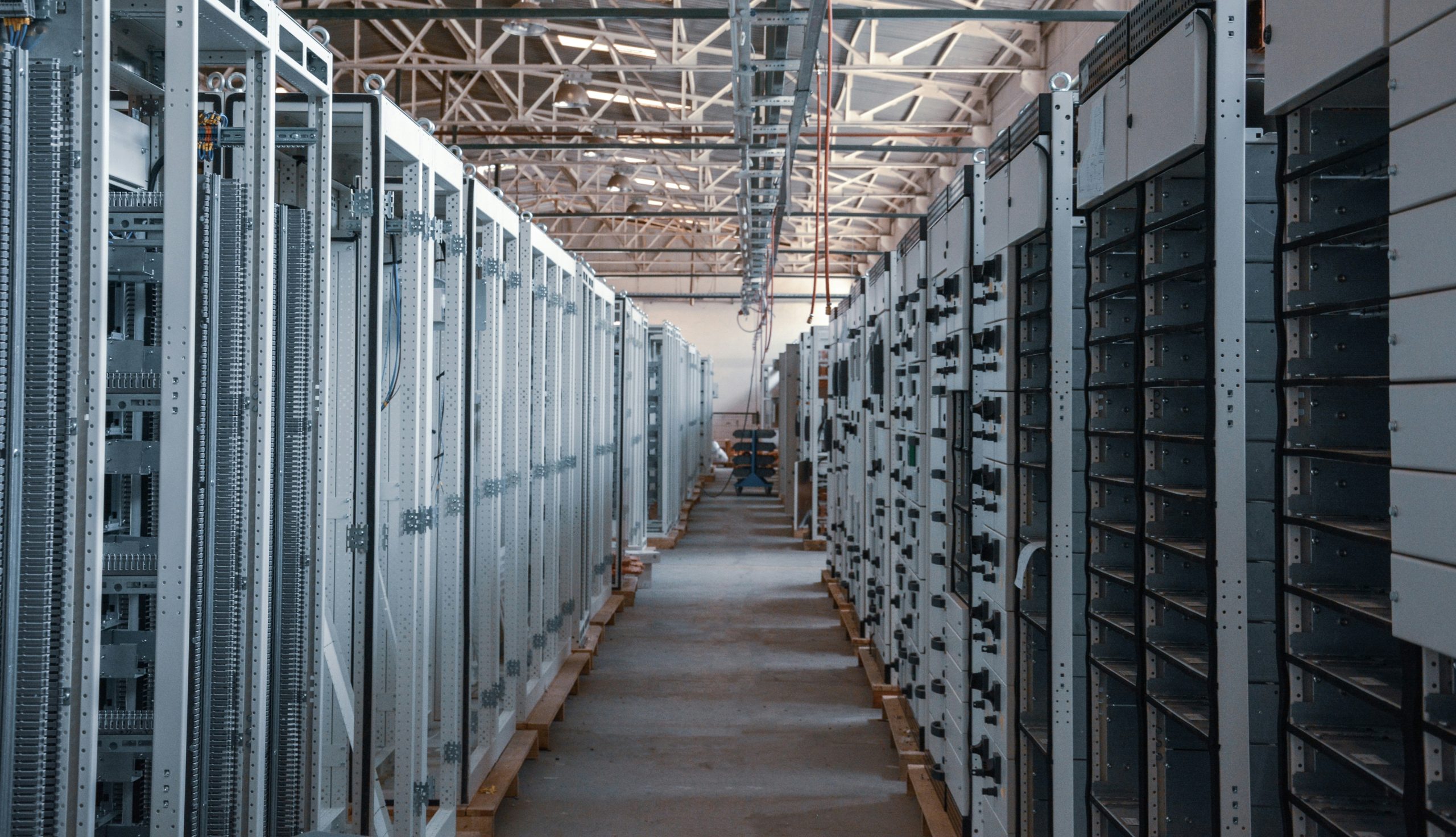
The AI boom is driving a rapid buildout of data centers—the warehouse-sized facilities that power tools such as ChatGPT, cloud storage, streaming, online shopping and corporate software. The Washington Post story highlights why this expansion has become politically contentious: these facilities can create jobs and digital capacity, but their heavy electricity and water needs raise questions about utility bills, grid reliability, local noise and climate goals.
AI data centers are being built at a historic pace because modern artificial intelligence needs enormous amounts of computing power—and that computing power lives in physical buildings filled with specialized servers. Put simply: every time millions of people ask an AI chatbot a question, stream a video, save files to the cloud or use an online service, data centers do the behind-the-scenes work.
But the construction boom is also triggering a backlash. As a Washington Post article published by Michigan Advance notes, residents and policymakers are raising “very legitimate concerns” about the facilities’ energy and water use, higher utility costs, noise and the possibility that AI could displace jobs.
The question is no longer whether AI needs more infrastructure. It does. The harder question is who pays for it, where it gets built and how communities can make sure the benefits outweigh the costs.
What Is an AI Data Center?
A data center is a secure industrial facility that houses thousands—or sometimes hundreds of thousands—of computers called servers. Those machines store information, run websites, process payments, host cloud applications and deliver digital services.
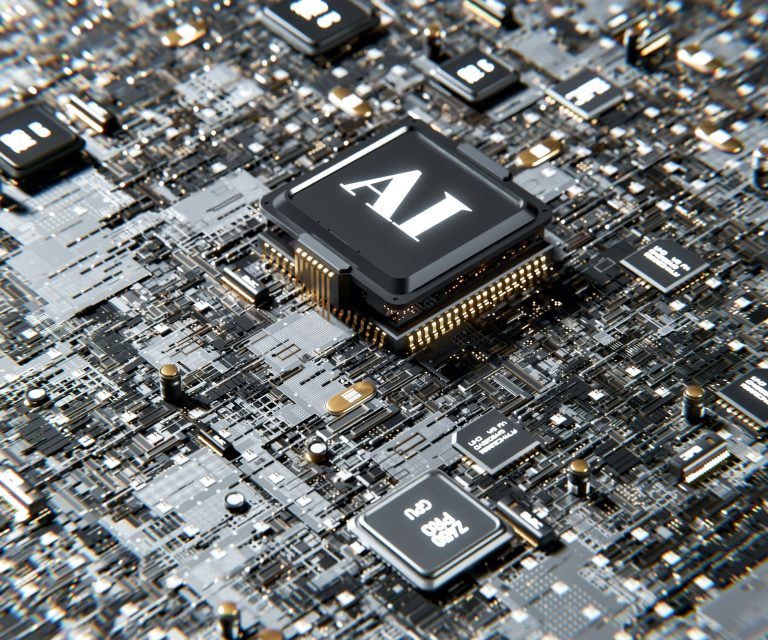
An AI data center does those things too, but it is equipped with large numbers of powerful chips, often graphics processing units (GPUs), that are designed to handle the complex math behind artificial intelligence.
Think of it this way:
- A normal data center is like a large office full of workers processing routine paperwork.
- An AI data center is like a massive research lab packed with specialists solving difficult problems around the clock.
Those “specialists” are computer chips. Training a major AI model involves feeding it enormous amounts of data so it can learn patterns in language, images, audio or code. Then, whenever someone uses the finished model—asking a chatbot to draft an email, for example—the data center must run more calculations to generate an answer.
That second step is called AI inference. It may sound technical, but it simply means the model is using what it learned to respond to a real request.
Why the Data Center Boom Is Happening
The main reason is demand. Businesses and consumers increasingly use cloud software, streaming platforms and AI tools, and technology companies are racing to add enough computing capacity to support them.
The International Energy Agency (IEA) estimates that global data-center electricity use was about 415 terawatt-hours in 2024, or roughly 1.5% of worldwide electricity consumption. Its base-case forecast expects data-center demand to more than double to around 945 terawatt-hours by 2030.
That growth is not solely about chatbots. The demand comes from several overlapping trends:
- Generative AI tools for writing, search, customer service, coding, design and analysis.
- Cloud computing used by companies, governments, schools and hospitals.
- Video streaming, social media, gaming and online storage.
- AI-powered business systems that analyze documents, detect fraud, manage logistics or support scientific research.
- Competition among major technology companies to build and rent out computing capacity.
The scale of AI demand is striking. The IEA says electricity use at AI-focused data centers rose 50% in 2025, while overall data-center electricity consumption grew 17%. It expects total data-center electricity use to rise from roughly 485 terawatt-hours in 2025 to 950 terawatt-hours by 2030, with AI-focused facilities growing faster still.
In other words, the industry is not building data centers simply because AI is fashionable. It is building them because companies believe AI will become a core utility-like service—similar to internet access, electricity or cloud storage—for businesses and consumers.
Why Communities Are Concerned
The public debate is not really about whether a single building uses power. It is about the cumulative impact of hundreds of large projects connecting to local power grids, water systems and roads.
Electricity demand and utility bills
Data centers need reliable electricity 24 hours a day. AI servers need even more power than conventional servers because they perform intensive calculations and generate substantial heat.
The U.S. Department of Energy found that data centers used about 4.4% of U.S. electricity in 2023. Its estimate projected that share could reach between 6.7% and 12% by 2028.
The Federal Energy Regulatory Commission has also reported that data centers more than doubled their electricity use between 2018 and 2023, with advanced AI servers contributing to the increase.
That matters locally because a large new data center may require:
- New transmission lines and substations.
- More power plants or expanded generation capacity.
- Upgrades to the local distribution grid.
- Backup generators for outages and emergency operations.
If utilities build expensive infrastructure primarily to serve a small number of very large customers, households understandably ask whether they will end up covering part of the cost through their monthly electric bills. That concern is especially important in fast-growing regions where grid planning was not designed for several huge, energy-intensive facilities arriving at once.
Grid Strategies, a power-sector consulting firm, found that data centers account for about 55% of projected demand growth in utility forecasts over the next five years.
Water use for cooling
Servers produce heat, and that heat must be removed to keep equipment running safely. Some data centers use air cooling, while others use water-based systems or a combination of both. The exact water footprint varies widely based on the facility’s design, climate, weather and the type of electricity supplying it.
Still, the potential scale is large. The Congressional Research Service, citing an International Energy Agency estimate, says a 100-megawatt U.S. data center may directly consume roughly as much water per day as 2,600 households. When indirect water use related to electricity generation is included, the total can equal the water consumption of about 6,500 households.
That is why data-center proposals can become especially controversial in drought-prone areas or communities facing water-supply constraints. People want clear answers: Where will the water come from? Will it compete with homes, farms or businesses? Will the company use drinking-quality water, recycled wastewater or another source?
A responsible project should disclose expected water use, explain its cooling system and set measurable targets for conservation and reuse.
Climate and pollution risks
The Washington Post/Michigan Advance article frames a central concern bluntly: a large wave of new electricity demand could make it harder to reduce carbon emissions and avoid a climate crisis.
The climate outcome depends on how the added power is generated. If a data center is served largely by wind, solar, nuclear, geothermal energy, storage and a cleaner grid, its emissions profile can improve. If its demand leads to more fossil-fuel generation or extended operation of older gas- and coal-fired plants, emissions can rise.
This is why clean-energy claims deserve scrutiny. Buying renewable-energy credits is not necessarily the same thing as adding clean power at the place and time a data center needs it. Communities should ask whether a proposed facility is helping finance new clean generation, storage and transmission—or merely purchasing accounting instruments after the fact.
Noise, land and quality of life
Data centers do not employ as many people as factories of a similar size, but they can occupy large tracts of land. They may also generate persistent noise from cooling equipment, transformers and backup generators.
For a nearby resident, the issue can be practical rather than abstract: Will the project change traffic? Will nighttime noise increase? How will it affect property values, local views, water systems and emergency services?
Those concerns deserve a detailed, public review before construction begins—not a vague promise that the project will be “state of the art.”
The Economic Case for Building Them
It would be incomplete to portray all data centers as a burden. They can create construction work, tax revenue, infrastructure investment and a foundation for digital services that local businesses and residents use every day.
Supporters also argue that the United States needs more AI and cloud infrastructure to remain competitive in technology, science, defense and advanced manufacturing. If demand for computing grows but domestic capacity does not, companies may build elsewhere or face bottlenecks that slow innovation.
The challenge is that data centers can be both economically valuable and resource-intensive at the same time.
A well-planned facility may bring investment and support cleaner grid upgrades. A poorly planned one may strain a community’s power and water systems while offering limited long-term local employment. The difference comes down to planning, transparency and enforceable commitments.
What Better Data Center Development Looks Like
The AI data center boom does not have to be an all-or-nothing choice between innovation and community protection. Policymakers, utilities and developers can set clearer conditions before approving projects.
Key safeguards include:
- Requiring companies to pay a fair share of transmission, generation and grid-upgrade costs.
- Publishing project-level estimates for electricity demand, water use, noise and backup-generator emissions.
- Prioritizing sites with existing transmission capacity, reclaimed-water access and lower environmental risk.
- Using more efficient chips, servers and cooling systems.
- Expanding clean electricity, battery storage and transmission alongside new computing capacity.
- Setting limits on potable-water use, especially in water-stressed areas.
- Giving residents meaningful opportunities to review plans before permits are issued.
- Requiring performance reporting after a facility opens, rather than relying only on preconstruction projections.
These measures matter because the infrastructure decisions made today can shape electricity prices, land use and emissions for decades.
The Bottom Line
The surge in AI data center construction is a direct result of the growing demand for artificial intelligence, cloud computing and digital services. These facilities are the physical backbone of the AI economy—but they are also becoming major users of electricity, water and land.
The key public-policy issue is not whether data centers should exist. It is whether they are built transparently, powered responsibly and connected to the grid in a way that protects households from unnecessary costs.
As the Washington Post story makes clear, the concerns are real: “enormous energy and water use,” potential pressure on utility bills, noise and job displacement are now part of the broader debate over AI’s real-world footprint. The next phase of the AI boom will be judged not only by smarter software, but also by whether communities see tangible benefits—and whether the industry earns the resources it needs to grow.
This content is provided by AIxAverage.com for general educational and informational purposes and does not constitute any substantive advice. It was developed with support from AI and reviewed by our editorial team for accuracy. Even so, AI-assisted material can contain errors, omissions, or information that is no longer current. We always encourage our readers to confirm any important details with trusted, independent sources.