Washington is talking more urgently than ever about artificial intelligence, but it is still struggling to turn that concern into law.
A group of House Democrats is asking Speaker Mike Johnson to delay Congress’s planned recess until lawmakers approve AI safeguards. Their argument: artificial intelligence is advancing quickly enough that waiting could leave Americans exposed to scams, job disruption, privacy problems and cybersecurity risks. “We cannot disagree about the imperative for Congress to act,” the lawmakers said in a joint statement, reported by CBS News.
But Republican leaders and President Donald Trump are signaling a different priority: keeping the United States ahead in the global AI race, especially against China. The clash illustrates why comprehensive AI regulation has been so hard to pass—even as both parties agree that powerful AI systems bring real risks.
What is happening in Congress?
Congress has considered a range of artificial intelligence policy ideas, from rules requiring companies to explain how their systems work, to independent safety audits, to emergency powers that could stop certain AI systems from operating. Some proposals would also let competing technology companies cooperate on AI safety standards without running afoul of antitrust laws.
For the average person, these proposals are less about the technical details of AI and more about everyday questions:
- Can an AI-generated robocall impersonate a family member or a political candidate?
- Should companies test advanced AI systems before releasing them publicly?
- Who is responsible if AI helps launch a cyberattack or spreads damaging misinformation?
- How can the government prevent AI companies from cutting corners in a rush to release the next major product?
- Will AI affect jobs, electricity bills, children’s privacy or copyrighted creative work?
The House Democrats calling for action say the risks are too important to leave unresolved while Congress heads out of Washington. Their demand comes as the political debate around AI safety is moving onto the campaign trail ahead of the midterm elections.
Trump’s argument: regulate carefully—or fall behind
Speaker Johnson has argued that Congress should not rush into emergency legislation. “If Congress just races in and does some sort of emergency session to try to regulate AI, we will lose the race to China,” he said, calling that outcome “a threat to every single American.”
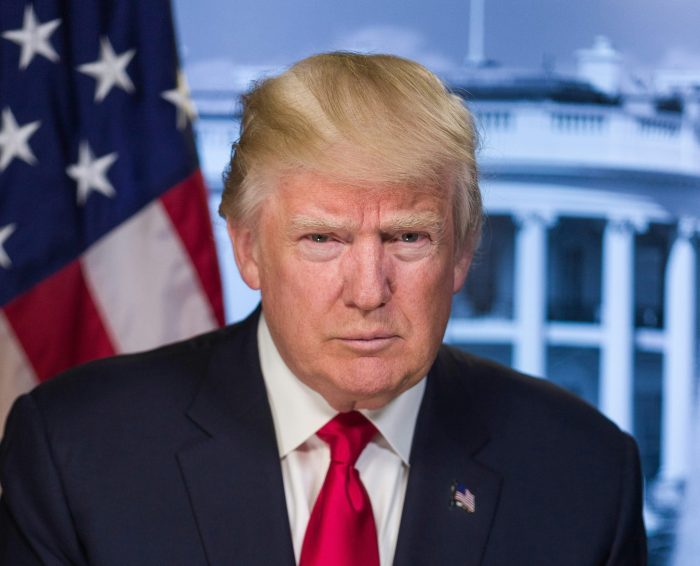
Trump has taken a similar position. Speaking in Ireland, he said, “We’re leading China in AI. We’re the most sophisticated country in the world. And frankly, I want to keep it that way because whoever wins AI wins.”
That view treats AI as more than a consumer technology issue. It frames the technology as a national-security and economic competition—similar to earlier races over nuclear power, space exploration, semiconductors and the internet.
The White House’s national AI legislative framework makes that priority explicit. It calls for a federal approach that promotes American AI development, expands workforce training, addresses AI-enabled scams, protects children, considers intellectual-property concerns and strengthens U.S. competitiveness. It also warns that a “patchwork of conflicting state laws” could weaken innovation and the country’s ability to lead in AI.
In plain English, the administration’s message is: the U.S. needs rules, but those rules should be consistent nationwide and should not make it harder for American companies to build and deploy AI tools.
Why AI safety advocates want faster action
AI safety advocates argue that the technology is moving faster than government oversight. They worry that voluntary promises from technology companies may not be enough when AI models become better at writing code, finding security vulnerabilities, generating convincing fake content and carrying out multi-step tasks.
CNN reported that federal agencies and leading AI companies have been struggling to establish a clear process for testing the most powerful “frontier AI” models—meaning the newest and most capable systems at the edge of current technology. According to the report, Congress has debated AI oversight but has not passed an overarching AI regulation law.
Joshua Saxe, formerly Meta’s senior technical expert on AI security, described the atmosphere bluntly: “This feels like early COVID.” He said the sense of urgency is appropriate.
The comparison is not about AI being a disease. It is about the concern that institutions may be reacting slowly to a fast-moving risk. In this debate, a “guardrail” means a safety measure designed to prevent or limit harmful uses of AI—for example, testing whether a model can help hackers break into systems, create dangerous instructions, or evade the restrictions placed on it.
Former OpenAI safety researcher Steven Adler made the case for a stronger government role, noting that some dangers may be impossible for companies to measure fully on their own. “Some risks are difficult for anyone but the government to adequately measure, like whether AI models know and might leak classified information,” Adler told CNN.
The voluntary AI framework—and its limits
The Trump administration has already moved toward a voluntary review process for the most powerful AI models before they are released to the public. That approach would allow participating companies to share advanced systems with the government for evaluation, rather than requiring every company to follow mandatory federal testing rules.
Voluntary programs can be useful because they may encourage quick cooperation and allow officials to learn from companies that understand the technology best. They can also be easier to launch than a major new law.
However, critics see an obvious weakness: a voluntary framework depends on companies agreeing to participate and following through. It may not provide clear penalties when a company declines to share a model, ignores recommended safety steps or releases a product before outside testing is complete.
That uncertainty is central to the current AI policy debate. Supporters of tougher AI regulation say the government needs enforceable standards before an AI failure causes widespread harm. Supporters of a lighter-touch approach say rigid requirements could become outdated quickly and push innovation—or talent and investment—to other countries.
What this means for everyday Americans
The congressional stalemate may sound distant, but its consequences could show up in ordinary life.
| Issue | What it could mean for people |
|---|---|
| AI scams and deepfakes | More convincing fake voices, images and videos could make fraud and misinformation harder to spot. |
| Cybersecurity | Advanced AI may help defenders find vulnerabilities, but it can also make some cyberattacks faster or easier to scale. |
| Children and privacy | Parents may need clearer controls over how AI apps collect data, interact with minors and recommend content. |
| Jobs and skills | AI could change how people work across many industries, making retraining and AI literacy more important. |
| Electricity and data centers | The growing demand for AI computing could affect power-grid planning and raise questions about who pays for new infrastructure. |
| Creative rights | Writers, artists, publishers and musicians are pushing for clarity on how AI companies use copyrighted work for training. |
The White House framework acknowledges several of these concerns, including children’s wellbeing, electricity costs, intellectual property and workforce preparation. It says federal policy should ensure that Americans benefit from AI-driven growth while building public trust in how the technology is developed and used.
The bottom line on AI regulation
Congress is not debating whether artificial intelligence matters. It is debating what kind of rules can protect the public without weakening American innovation.
Democrats pushing for immediate safeguards say delay is risky because AI systems are becoming more powerful and more widely available. Trump and congressional Republicans emphasize that overly aggressive regulation could hand an advantage to China. Meanwhile, AI companies, policymakers and experts are still trying to define who should test powerful models, what risks deserve government intervention and whether voluntary commitments are enough.
Former President Barack Obama captured the broader political challenge when he warned that AI is “moving very fast in private hands.” He added: “If we don’t get on top of it, I think can be dangerous. If we do get on top of it, I do think it’s beneficial.”
That may be the clearest summary of the U.S. AI policy challenge: the country wants the benefits of artificial intelligence—new tools, stronger businesses, scientific advances and productivity gains—without waiting for a major failure before deciding where the guardrails belong.
This content is provided by AIxAverage.com for general educational and informational purposes and does not constitute any substantive advice. It was developed with support from AI and reviewed by our editorial team for accuracy. Even so, AI-assisted material can contain errors, omissions, or information that is no longer current. We always encourage our readers to confirm any important details with trusted, independent sources.